
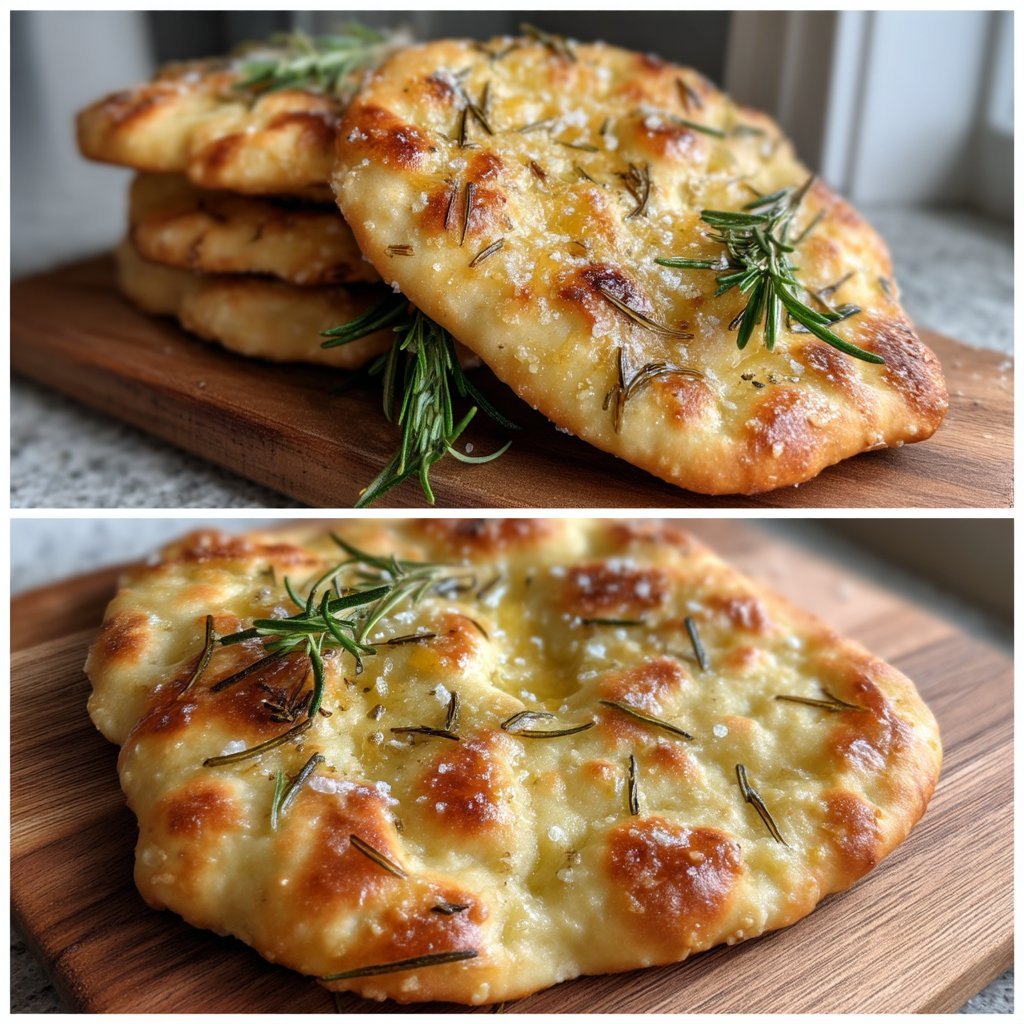
Rosemary & Sea Salt Flatbread
Craving something warm, crisp at the edges, and impossibly simple to pull together? This rosemary & sea salt flatbread is that neighborly comfort food that answers the call and it has a little secret: because you make it at home, you control the ingredients and the pairing. I love to enjoy a wedge of this with something fiber-forward for a truly satisfying bite (and yes, it plays nicely with my favorite dark chocolate bark with toasted quinoa for a tiny treat afterward).
Why Your Gut Will Love This
- Homemade flatbread avoids the extra preservatives and hidden sugars often lurking in store-bought versions, so your digestion thanks you for fewer surprises.
- A short, gentle rise with yeast helps make the dough easier on your stomach than some quick-bread alternatives think comfort without the heavy bloat.
- Olive oil adds healthy fats that soothe the gut lining and help you feel satisfied longer, reducing mid-afternoon sugar cravings.
- Pair this flatbread with fiber-rich toppings or dips (I adore it alongside my magic creamy white bean rosemary soup) to sneak in extra beans and veggies without sacrificing flavor.
Ingredients Notes
- 2 cups all-purpose flour the base for a tender, flexible flatbread (you can easily adapt this with whole-grain flour later for more fiber).
- 1 teaspoon active dry yeast
- 1 teaspoon salt
- 3/4 cup warm water
- 2 tablespoons olive oil a hero ingredient that keeps the crumb soft and adds gut-friendly healthy fats.
- 2 tablespoons fresh rosemary, chopped a fragrant herb that adds antioxidants and savory flavor with very little fuss.
- Sea salt for sprinkling
Step-by-Step Instructions
- In a mixing bowl, whisk together the flour, active dry yeast, and salt so everything’s evenly distributed this helps the dough rise nicely.
- Add the warm water and olive oil, stirring until a shaggy dough forms; don’t worry if it looks a little rough at first.
- Turn the dough onto a lightly floured surface and knead for about 5–7 minutes until it becomes smooth and springy think gentle rhythm, not a workout.
- Lightly grease a bowl, place the dough inside, cover with a towel, and let it rise in a warm spot for about 1 hour, until it puffs up; patience here pays off with softness.
- Preheat your oven to 475°F (245°C) and slide in a baking sheet or pizza stone so it’s good and hot this gives you that golden, blistered crust.
- Punch down the risen dough, divide it into two pieces, and roll each into a thin round; a light hand keeps them tender thinner = crispier edges.
- Transfer the rounds to parchment paper, brush or drizzle lightly with olive oil (if you like), then sprinkle with the chopped rosemary and a pinch of sea salt.
- Carefully take the hot baking sheet or stone from the oven and slide the flatbreads (on the parchment) onto it use oven mitts and a steady hand.
- Bake for 10–12 minutes, until the edges are golden and the tops have little browned bubbles.
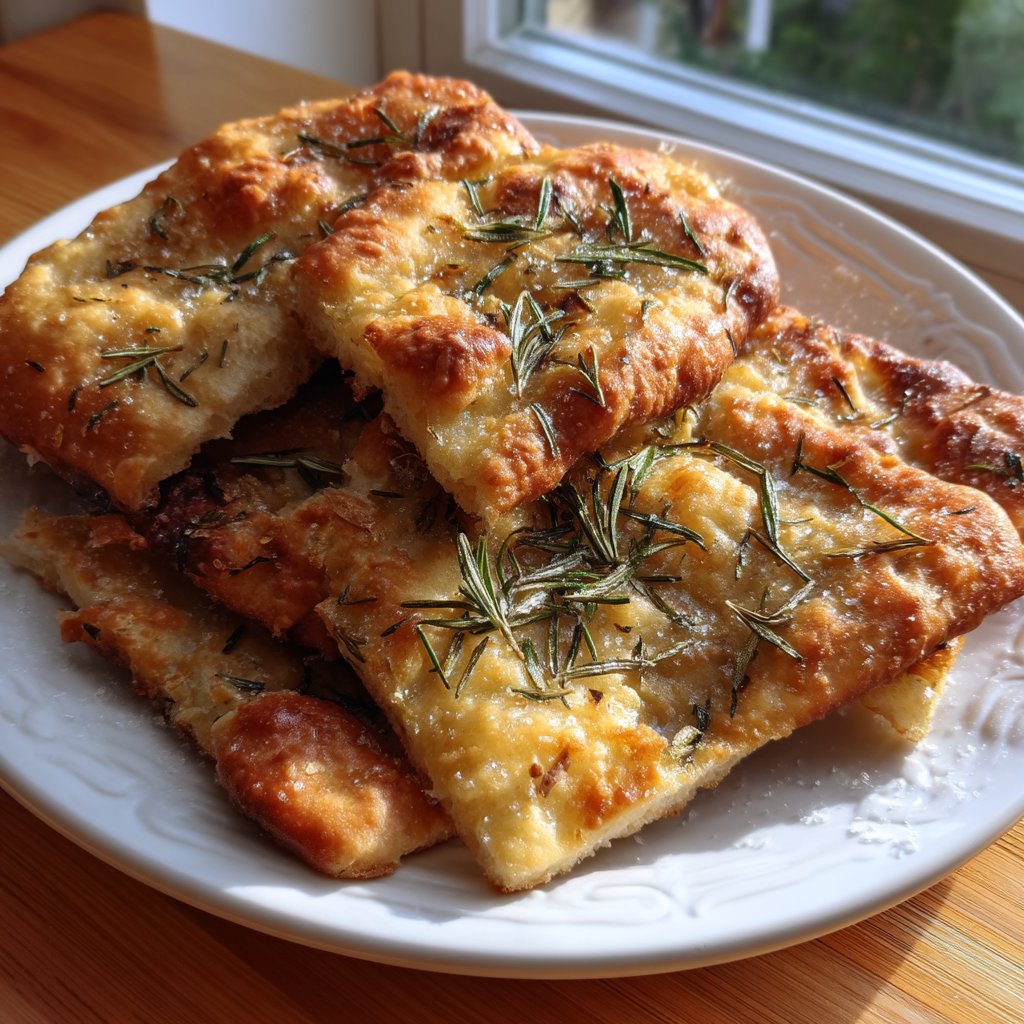
- Remove from the oven, let cool a few minutes, then tear and serve warm these are happiest fresh but still delightful the next day.
Rose’s Tips for Success
- For chew with tender bite, don’t over-flour your surface while rolling use just enough to keep things from sticking.
- A smoking-hot baking surface is the trick for crisp, blistered flatbread; preheat for at least 20 minutes so the dough cooks quickly.
- Want herbier flavor? Press a few rosemary leaves into the dough before baking and finish with a sprinkling of sea salt right after they come out of the oven.
Serving & Storage
Serve warm with olive oil for dipping, alongside soups and salads, or use as a base for open-faced toppings. Leftovers store well: keep cooled flatbreads in an airtight container in the fridge for up to 3–4 days. You can freeze them stacked with parchment between each piece in a freezer bag for up to 2 months; thaw at room temperature and reheat in a hot skillet or oven until warmed through.
Frequently Asked Questions
Q: What if my dough doesn’t rise much?
A: Check that the water was warm (not hot) and that the yeast is fresh also allow it the full hour in a warm spot; small kitchens sometimes need a little more time.
Q: Why does my flatbread turn out tough?
A: Over-kneading or too much flour while rolling can make it dense aim for a smooth, slightly tacky dough and roll gently.
Q: How much sea salt should I sprinkle?
A: A light sprinkle is all you need to enhance the rosemary and olive oil; start with a pinch per flatbread and adjust to taste.
Conclusion
If you love a simple, savory flatbread that’s easy on the tummy and pairs beautifully with fiber-rich sides, this rosemary & sea salt flatbread is a keeper. For another take on this classic combination, check out Stonefire’s Rosemary, Olive Oil and Sea Salt Flatbread for inspiration and serving ideas.