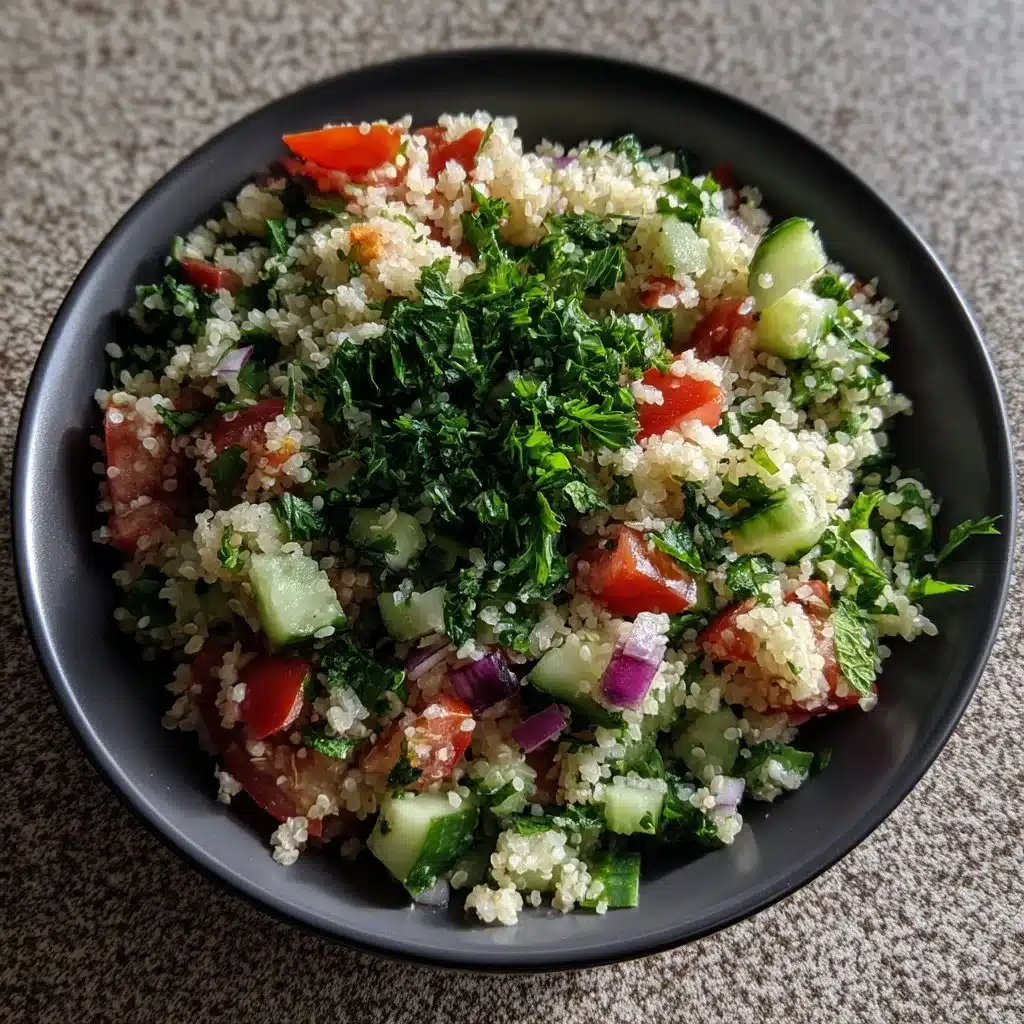
Quinoa Tabbouleh (Gluten-Free)
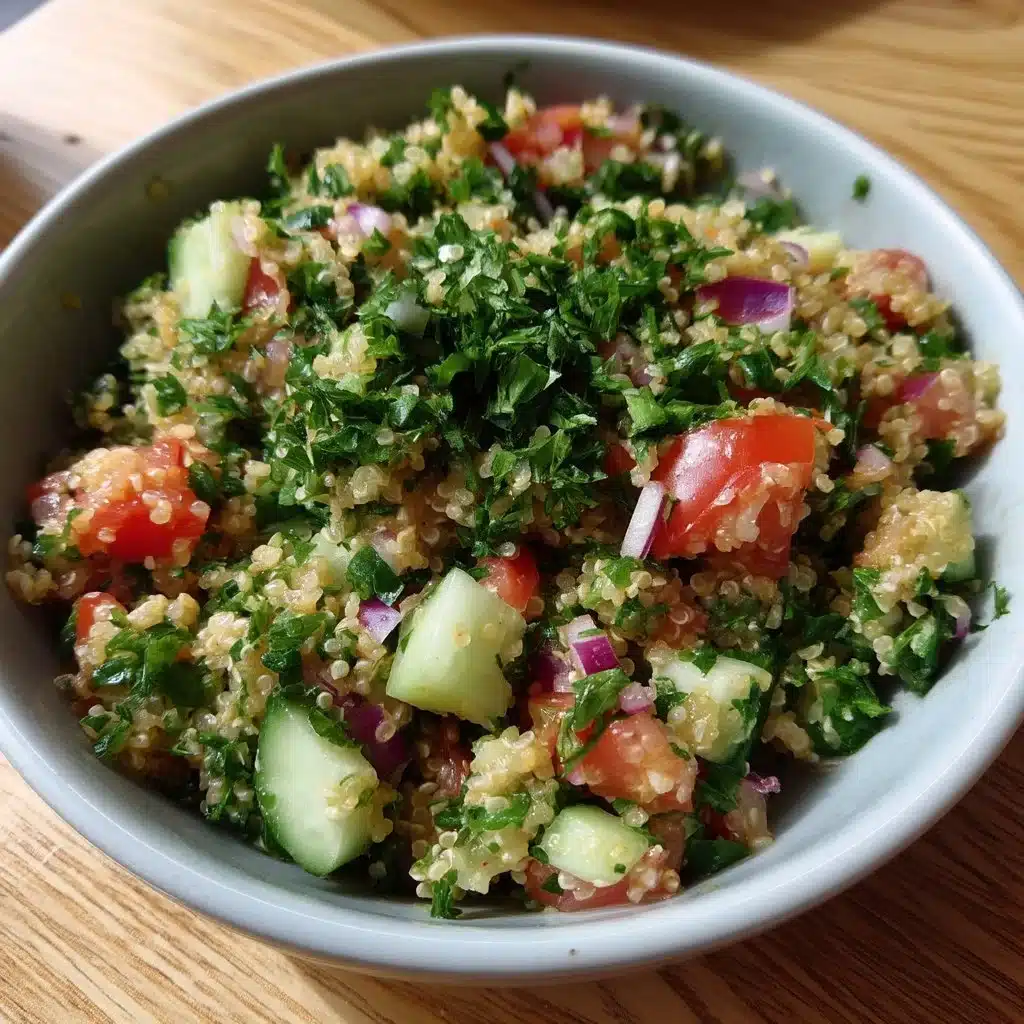
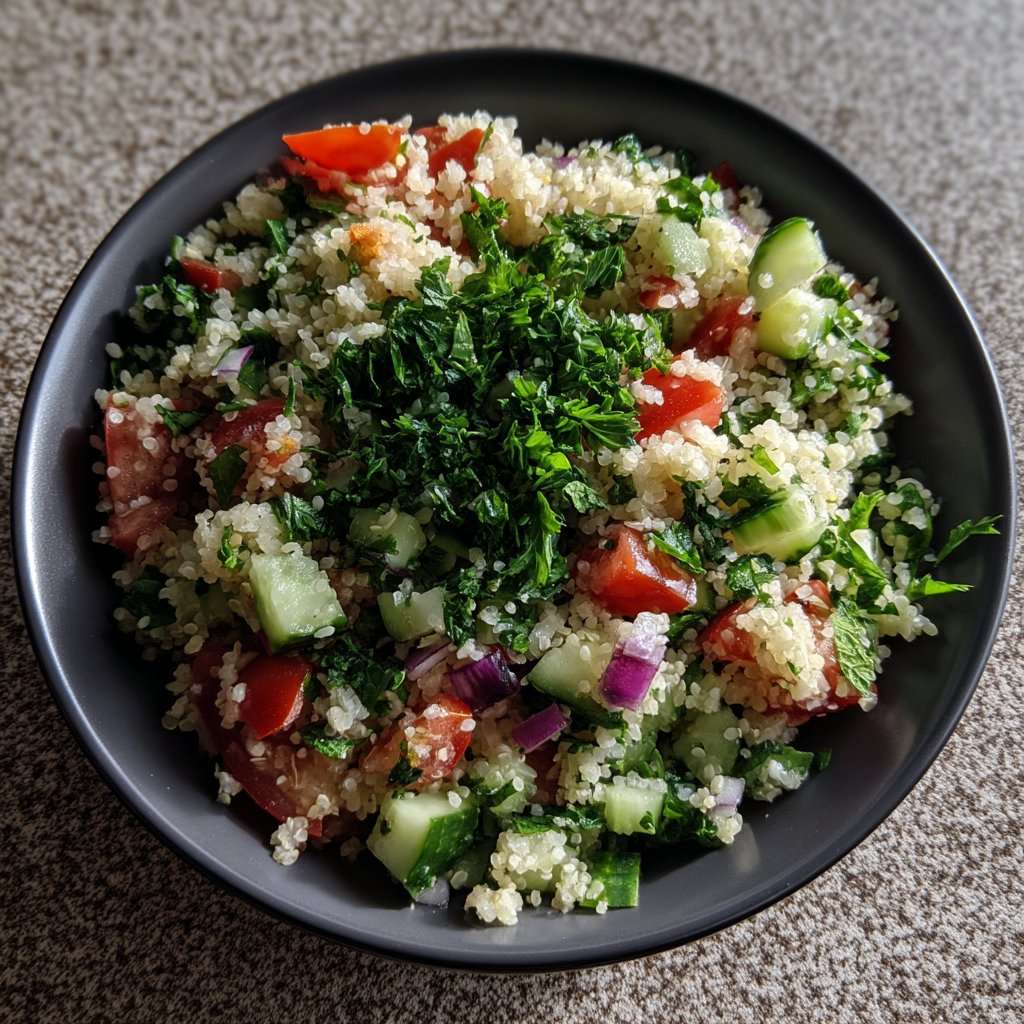
Craving something bright, herby, and comforting that still feels like a hug for your belly? Meet this quinoa tabbouleh the classic salad you love, with a sneaky fiber-forward twist: swapping bulgur for quinoa so it’s naturally gluten-free and extra gentle on digestion. Better than the store-bought tubs, this version is brighter, fresher, and packed with gut-loving ingredients you can actually pronounce.
Why Your Gut Will Love This
– Quinoa is a whole-grain seed rich in both soluble and insoluble fiber, which helps feed friendly gut bacteria and supports regularity.
– Parsley and mint add fresh phytochemicals and fiber without extra calories the “sneaky” herbs that bulk up each bite.
– Veggies like cucumber and tomato add water-rich fiber, which can help prevent bloating from overly starchy sides and keeps you feeling balanced.
– A lemon-and-olive-oil dressing steadies blood sugar after the meal, helping you avoid the mid-afternoon crash.
Ingredients Notes
- 1 cup quinoa A protein-rich, gluten-free base that brings hearty fiber and a pleasant nutty bite.
- 2 cups water or vegetable broth Use broth for extra savory depth; water keeps it neutral.
- 1 cup parsley, finely chopped The hero herb: adds bright flavor plus alkalizing, fiber-packed greens.
- 1/2 cup mint, finely chopped A digestive-friendly herb that lifts the whole salad with cooling notes.
- 1 cucumber, diced Adds crisp, hydrating fiber to keep texture light and refreshing.
- 2 tomatoes, diced Juicy, sweet-tart bites that contribute fiber and vitamin C.
- 1/4 cup red onion, finely chopped Just a little for sharpness and a flavor punch.
- 1/4 cup olive oil Healthy fat to help absorb fat-soluble nutrients and round out the dressing.
- 2 lemons, juiced Bright acidity that balances flavors and helps the herbs sing.
- Salt and pepper to taste
Step-by-Step Instructions
- Rinse the quinoa under cold water to remove any bitter saponins. In a medium saucepan, combine the rinsed quinoa and 2 cups water (or broth) and bring to a gentle boil this helps the grains cook evenly.
- Once boiling, reduce the heat to low, cover, and simmer for about 15 minutes or until the quinoa has absorbed the liquid and looks fluffy. If you see tiny spirals (the germ), you know it’s done.
- Remove from heat and let the quinoa sit, covered, for 5 minutes, then fluff with a fork and spread it on a plate to cool faster patience here keeps the salad from getting mushy.
- While the quinoa cools, in a large bowl combine the chopped parsley, mint, diced cucumber, tomatoes, and red onion. Don’t worry if it looks like a lot of greens they’ll blend beautifully with the quinoa.
- Add the cooked, cooled quinoa to the vegetable-and-herb mixture and toss gently to combine, keeping the grains light and separate.
- In a small bowl, whisk together the olive oil, lemon juice, and a pinch of salt and pepper until emulsified taste and adjust the lemon or salt to your liking.
- Pour the dressing over the quinoa mixture and toss until everything is evenly coated. If it tastes a little flat at first, give it 10–15 minutes for flavors to marry.
- Serve chilled or at room temperature. This salad gets more flavorful as it rests, so if you can make it an hour ahead, even better.
Rose’s Tips for Success
– For fluffy quinoa, rinse well and fluff with a fork immediately after it rests; spreading it briefly on a tray speeds cooling and prevents clumping.
– Want brighter herbs? Chop the parsley and mint just before tossing and use a sharp knife to avoid bruising them.
– If you plan to make this ahead, keep a little extra lemon juice on hand to brighten the salad before serving, since flavors mellow in the fridge.
Serving & Storage
Serve this tabbouleh as a light main for a lunch that won’t weigh you down, or alongside grilled veggies or lean proteins for dinner. It’s lovely on its own, stuffed into lettuce cups, or spooned over a bed of greens.
Store in an airtight container in the refrigerator for up to 3–4 days. The texture is best within the first 48 hours; cucumbers and tomatoes release water over time. Freezing is not recommended the fresh vegetables will become watery and lose their crisp texture after thawing.
Frequently Asked Questions
Q: Can I use broth instead of water for cooking the quinoa?
A: Yes vegetable broth will add savory depth, but be mindful of salted broths if you’re watching sodium; you may need less added salt in the dressing.
Q: How do I keep the quinoa from getting soggy?
A: Rinse the quinoa well, cook with the right liquid ratio, let it rest covered for 5 minutes, then fluff and spread it to cool so excess steam escapes before mixing with the wet vegetables.
Q: The salad tastes flat after chilling how can I fix it?
A: A squeeze of fresh lemon juice and a little extra olive oil stirred in just before serving brightens the flavors and refreshes the salad.
Conclusion
If you want another gluten-free take on tabbouleh with similar bright, herb-forward flavors, this Gluten-Free Quinoa Tabbouleh Salad – Tori Avey is a lovely source of inspiration.