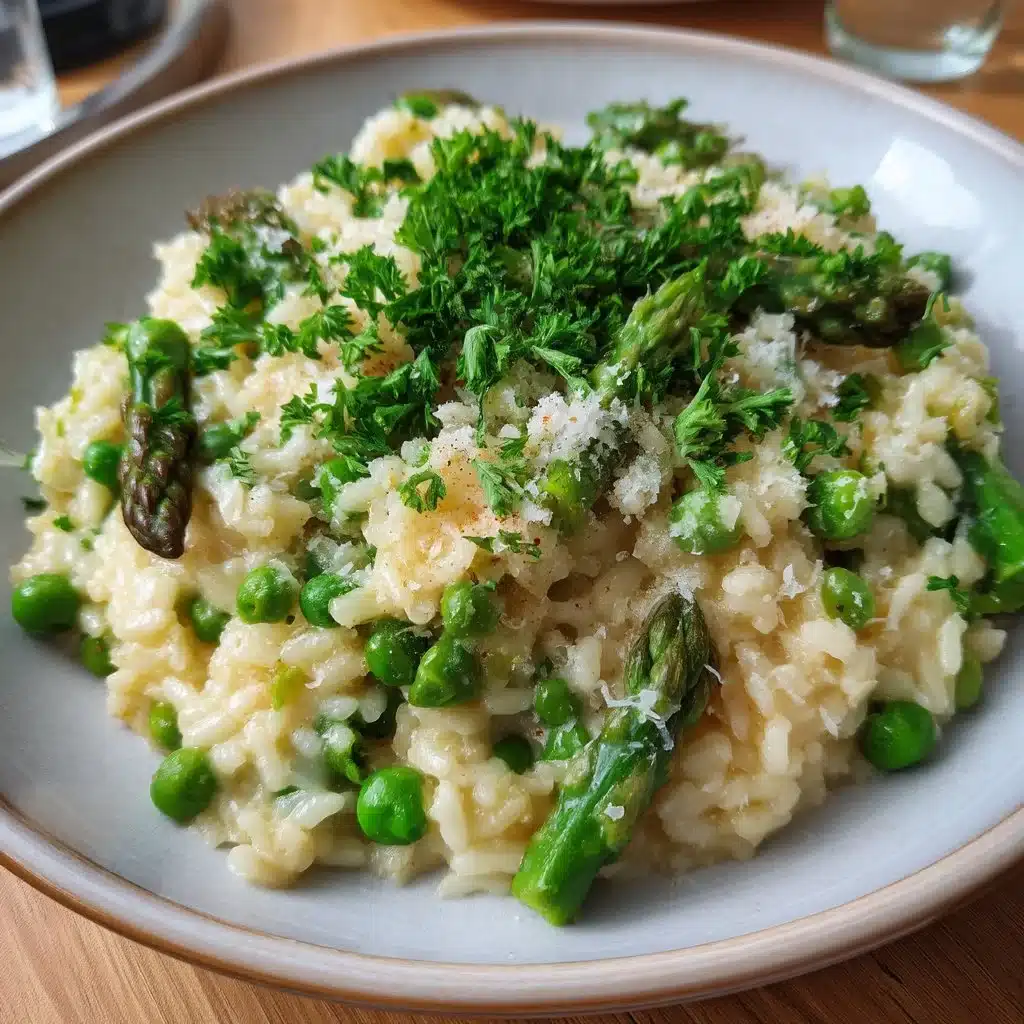
Asparagus & Pea Risotto
Craving something cozy that doesn’t leave you feeling heavy or foggy afterward? This Asparagus & Pea Risotto is comfort food with a clever twist — full of "sneaky fiber" from spring veggies so your gut gets some love while you get a creamy, comforting bowl. If you enjoy recipes that hide healthy goodness in plain sight, you might also like my garlic oil chickpea pasta for another fiber-forward weeknight winner.
Why Your Gut Will Love This
- Asparagus is a natural prebiotic — it feeds the good bacteria in your gut, helping digestion and reducing the chance of bloating.
- Peas bring soluble and insoluble fiber plus a bit of plant protein, which helps steady blood sugar and prevents those post-meal crashes.
- Arborio rice gives you comforting, slow-burning carbs that pair with veggies to keep you satisfied longer without a sugar spike.
- The combination of veggies and modest cheese/oil keeps richness without overdoing saturated fat — a gut-friendly balance; pair it with a lighter soup like my roasted cauliflower chowder with crispy chickpea croutons for a wholesome meal.
Ingredients Notes
- 1 cup Arborio rice — the short-grain rice that creates that classic, creamy risotto texture.
- 4 cups vegetable broth — warms the rice and adds gentle savory depth.
- 1 cup asparagus, chopped — a hero ingredient: prebiotic fiber and fresh spring flavor that lightens the dish.
- 1 cup peas (fresh or frozen) — a fiber-packed hero that adds sweetness and texture.
- 1 small onion, diced — builds the savory base.
- 2 cloves garlic, minced — gives a warm, familiar flavor without overpowering the vegetables.
- 1/2 cup Parmesan cheese, grated — a little umami-rich hero that adds creaminess and depth.
- 2 tablespoons olive oil — heart-healthy fat to help with flavor and texture.
- Salt and pepper to taste — simple seasoning to let the veggies shine.
- Fresh parsley for garnish — brightens and freshens each bite.
Step-by-Step Instructions
- Warm the broth: Put the 4 cups of vegetable broth in a saucepan and keep it over low heat so it stays hot but not boiling — this helps the rice cook evenly.
- Sauté the aromatics: In a large skillet, heat the olive oil over medium heat. Add the diced onion and cook, stirring, until translucent (about 4–5 minutes). Stir in the minced garlic and cook for another 30 seconds until fragrant.
- Toast the rice: Add the Arborio rice to the skillet and stir for 1–2 minutes so each grain gets a light coating of oil and a tiny toasty edge — it helps build flavor and the classic risotto texture.
- Begin ladling broth: Add one ladleful of the warm broth to the rice and stir. Keep stirring gently; once most of that liquid is absorbed, add another ladle. Repeat this process — patience here pays off in creaminess.
- Add the veggies: After about 15 minutes of adding broth and stirring, stir in the chopped asparagus and the peas. Don’t worry if it looks a bit messy; keep adding broth and stirring until the rice is creamy and tender but still has a slight bite (al dente), about 18–20 minutes total cook time.
- Finish with cheese and seasoning: Remove from heat, stir in the grated Parmesan, and season with salt and pepper to taste. If it needs a silkier finish, add a splash more warm broth or a drizzle of olive oil.
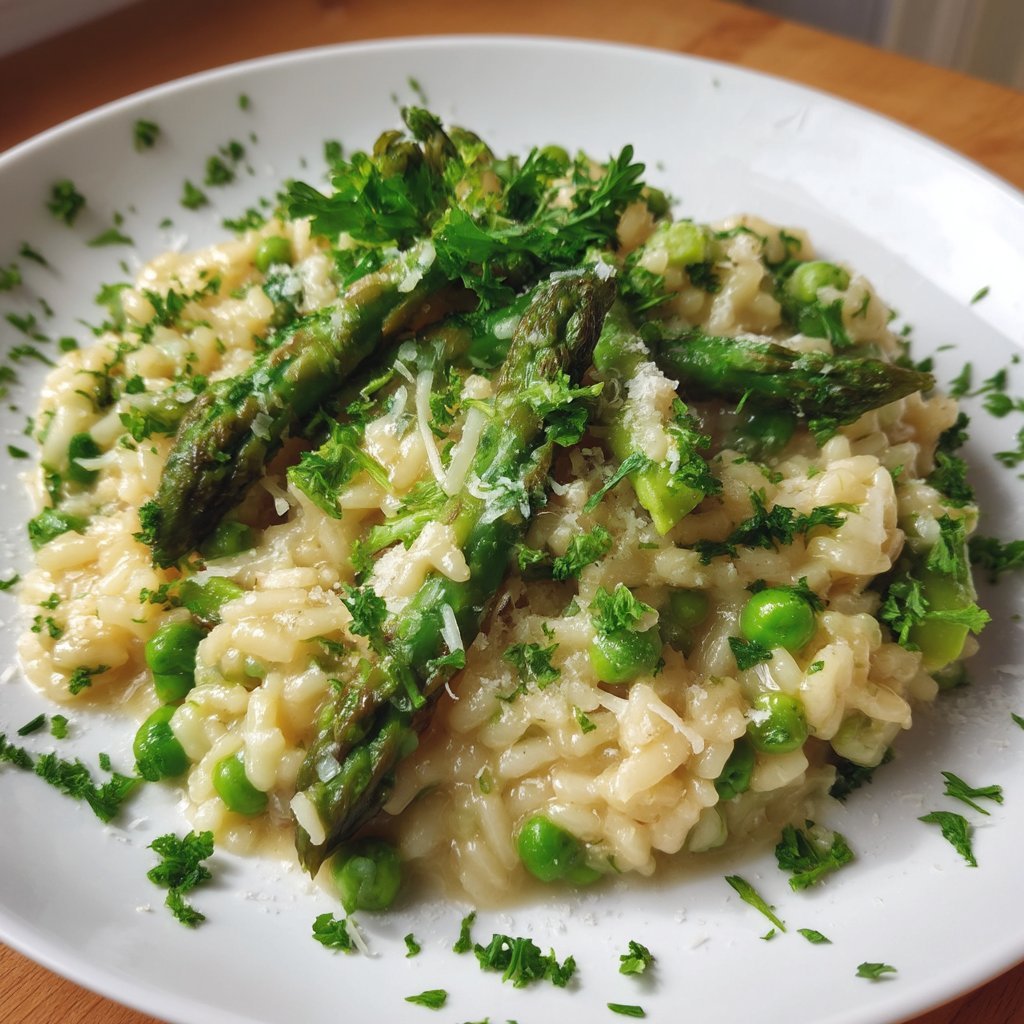
- Serve: Spoon into bowls and garnish with fresh parsley. Serve immediately while warm and creamy.
Rose’s Tips for Success
- Stir gently but often — risotto’s creaminess comes from coaxing starch out of the rice with movement; vigorous stirring isn’t needed, but don’t walk away for long stretches.
- If your risotto thickens too much before the rice is tender, add a little more warm broth (or a splash of hot water) — it’s easier to thin than to thicken at the end.
- For extra texture, briefly sauté the asparagus tips separately and toss them on top just before serving so they stay bright and slightly crisp.
Serving & Storage
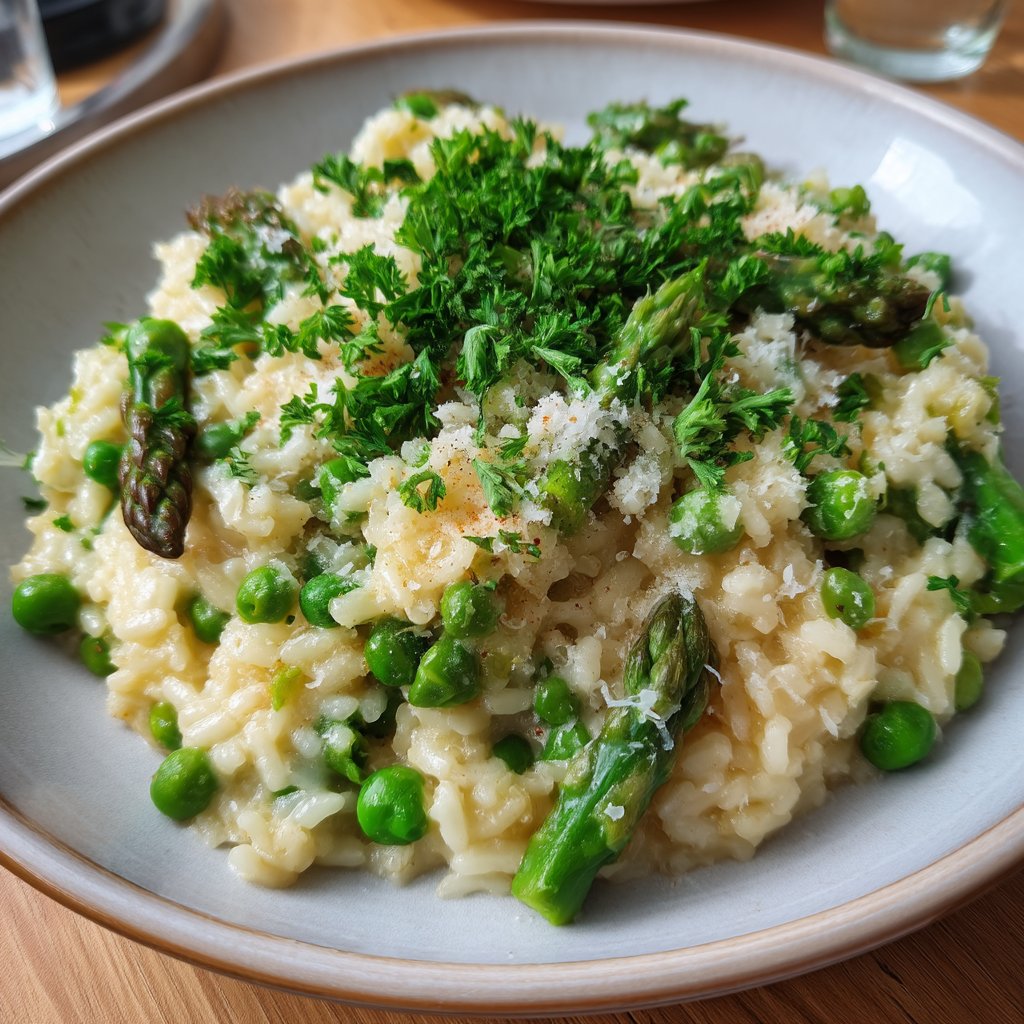
Serve this risotto hot with a sprinkle of parsley and a little extra Parmesan at the table. Leftovers keep well in the fridge in an airtight container for up to 3 days. To reheat, warm gently on the stove with a splash of broth or water to restore creaminess — high heat can dry it out. You can freeze risotto, but note the texture will change; if you do freeze, portion it into freezer-safe containers and use within 1 month. Thaw in the fridge overnight and reheat slowly with added liquid.
Frequently Asked Questions
Can I use frozen peas, or should they be fresh?
Frozen peas work wonderfully here — add them straight from the freezer when the recipe calls for peas; they’ll warm through quickly and keep their bright color and texture.
Do I have to use Arborio rice?
Arborio is ideal for that classic creamy risotto texture because of its starch content, so it’s my recommendation for best results.
What if I want to skip the Parmesan?
You can leave out the Parmesan if you prefer; the risotto will be less rich but still lovely — stir in a bit more warm broth and an extra drizzle of olive oil to boost silkiness and flavor.
Conclusion
This Asparagus & Pea Risotto is the kind of comfort food that treats your gut kindly — creamy, cozy, and full of sneaky fiber. For another lovely springtime idea that pairs similar flavors, try Kendall Andronico’s spring risotto with asparagus and peas for inspiration and a bright citrus twist.