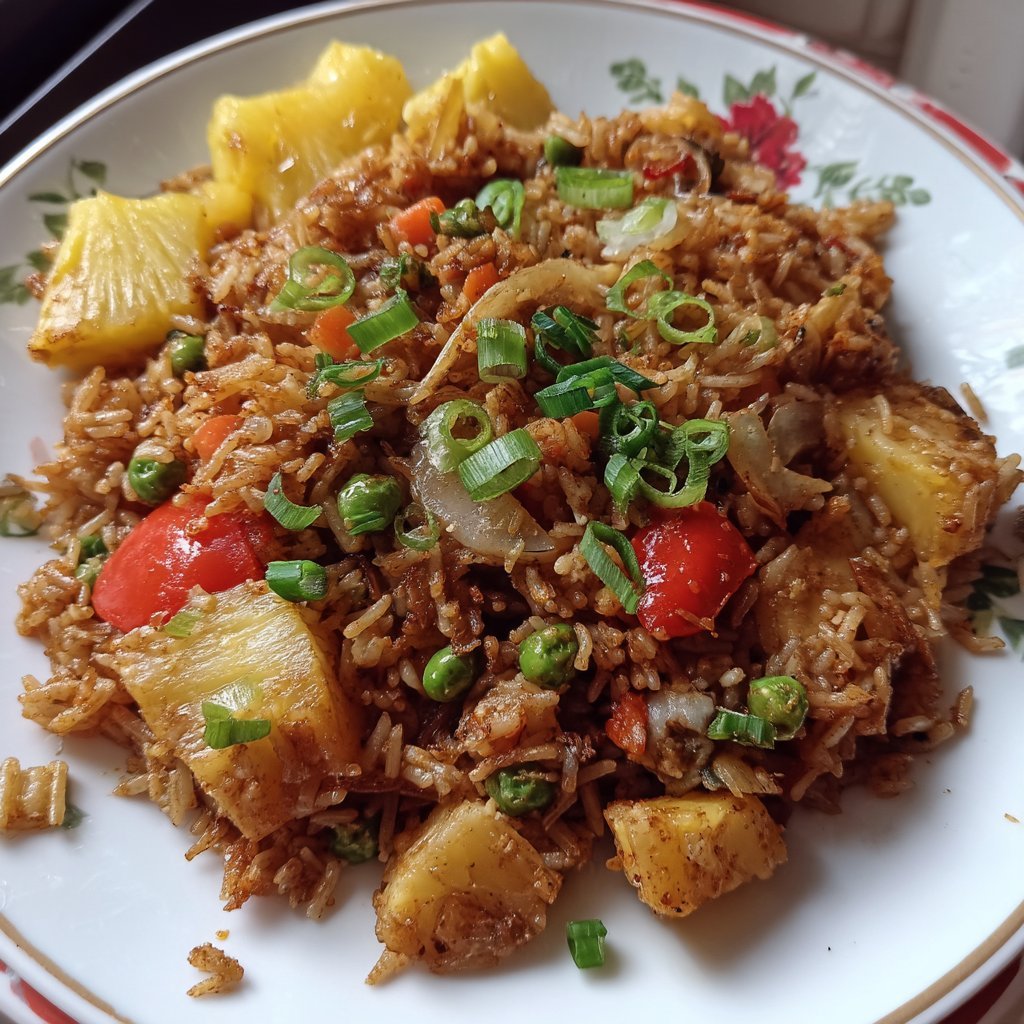
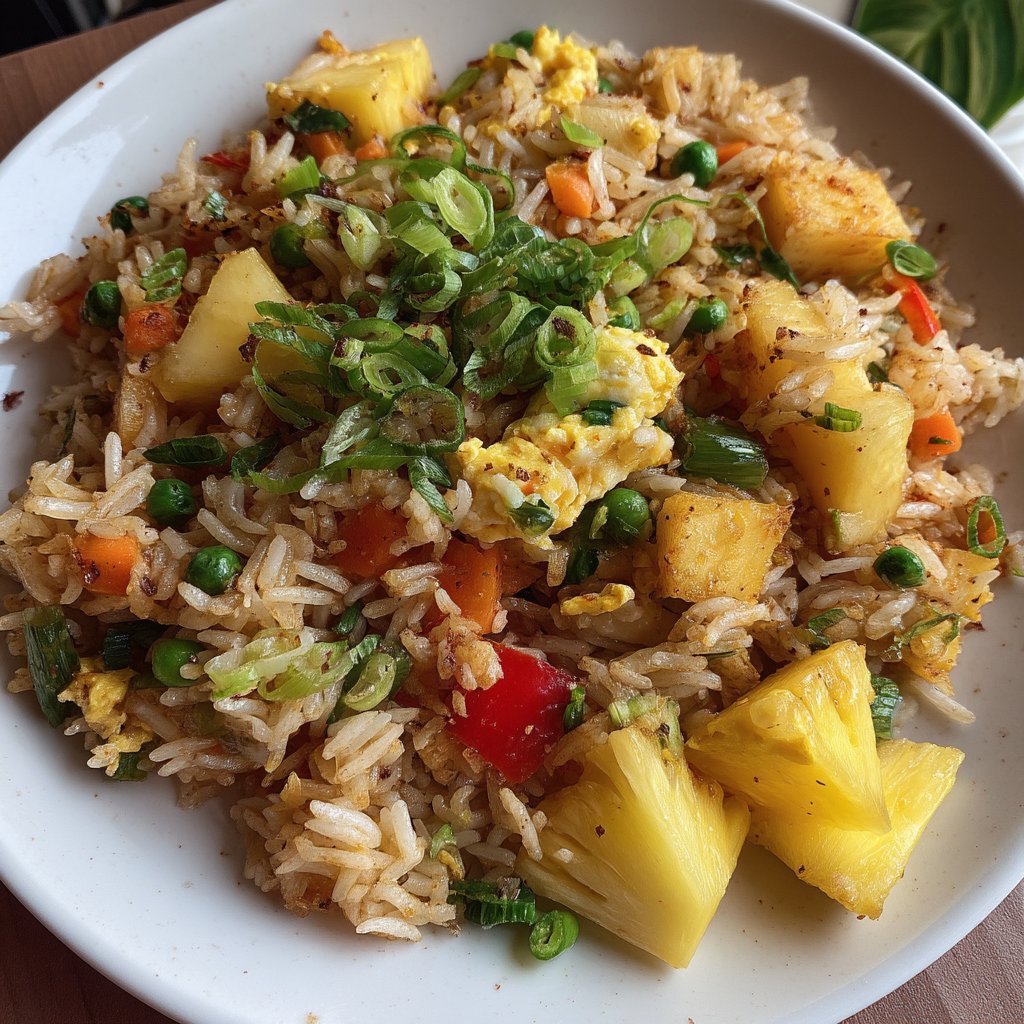
Pineapple Fried Rice (Thai Style)
You know that comfort-food pull—the warm bowl that makes you sigh and feel like everything’s going to be okay? This Pineapple Fried Rice delivers that hug, but with a sneaky little twist: it hides fiber-rich veggies and uses real pineapple instead of sugary sauces, so you get flavor without the crash. If you like cozy meals that also love your gut, you’re in the right kitchen — and if you want another nourishing bowl, I often pair this kind of meal with my creamy mushroom and wild rice soup for a true comfort spread.
Why Your Gut Will Love This
- Fiber from the rice and mixed vegetables supports regular digestion and keeps you feeling satisfied longer—no mid-afternoon sugar slump.
- Pineapple adds natural sweetness plus bromelain, an enzyme that can help gentle digestion (and brightens the flavor so you don’t need extra sugary sauces).
- Veggies like peas, carrots, and bell peppers add both insoluble and soluble fiber—this “sneaky fiber” helps bulk stool and feeds friendly gut bacteria.
- Balanced protein from eggs helps steady blood sugar after the meal, so you’re less likely to feel bloated or hungrier soon after eating.
Ingredients Notes
- 2 cups cooked rice — Leftover day-old rice works best for texture; it’s drier so the stir-fry gets those lovely, separate grains.
- 1 cup diced pineapple — Hero ingredient: adds sweet-tart brightness and digestive-friendly enzymes.
- 1 cup mixed vegetables (peas, carrots, bell peppers) — Hero veggies: colorful fiber, vitamins, and texture without shouting “healthy.”
- 2 eggs — Adds protein and silkiness; scramble into the rice for little pockets of comfort.
- 3 tablespoons soy sauce — For savory depth; adjust to taste for sodium control.
- 1 tablespoon curry powder — Warms and layers flavor; a little goes a long way.
- 2 cloves garlic, minced — Adds aromatics and gut-friendly flavor.
- 2 green onions, chopped — Bright garnish for freshness and crunch.
- Salt and pepper to taste — Simple seasoning to finish.
- Oil for cooking — Neutral oil or a touch of sesame for extra aroma.
Step-by-Step Instructions
- Warm a skillet or wok over medium heat and add a splash of oil. Let it shimmer—this helps everything cook quickly and without sticking.
- Toss in the minced garlic and sauté just until fragrant, about 30 seconds. Be attentive; garlic goes from golden to bitter quickly.
- Push the garlic to one side of the pan. Crack the eggs into the empty space and scramble them gently until fully cooked, then fold them into the garlic—don’t worry if they look a bit soft here, they’ll finish cooking with the rice.
- Add the mixed vegetables and cook until tender-crisp, about 3–4 minutes; you want them to keep some bite for texture and to preserve nutrients.
- Stir in the cooked rice, breaking up any clumps and mixing it thoroughly so grains get coated with the garlicky egg and oil.
- Add the pineapple, soy sauce, curry powder, and a pinch of salt and pepper. Start with less soy sauce if you’re watching sodium—you can always add more.
- Stir and toss everything together for 2–3 minutes, until the rice is heated through and the pineapple is warmed but still juicy—this step lets the flavors marry without turning the pineapple mushy.
- Finish by scattering the chopped green onions on top and serve immediately. Tip: Give it a quick taste and adjust seasoning—sometimes a little more soy or a dash of pepper is all it needs.
Rose’s Tips for Success
- Use chilled, day-old rice if you can—freshly cooked rice holds more moisture and can make the dish gummy; leftover rice gives that restaurant-style separation.
- Keep your pan hot and don’t overcrowd it—work in a single layer so ingredients sear quickly instead of steaming.
- Swap in extra mixed veggies (or chop up bell peppers finer) to boost the fiber without changing flavor—small pieces hide beautifully if you’re feeding picky eaters.
Serving & Storage
Serve this warm as a main for a light dinner or alongside a simple salad. It pairs beautifully with a cup of broth or a vegetable side for extra fiber and comfort.
Leftovers: cool quickly, transfer to an airtight container, and refrigerate for up to 3–4 days. To reheat, warm gently in a skillet with a splash of oil or in the microwave until steaming; add a sprinkle of water if it seems dry. Freezing is possible (store in freezer-safe containers), but pineapple texture softens after thawing—use frozen leftovers within 1–2 months for best results. If you plan to freeze, consider leaving the pineapple out until serving for a firmer bite.
Frequently Asked Questions
- Can I use fresh-cooked rice instead of day-old rice?
Yes—you can, but spread it on a tray to cool a bit and pat dry so the grains lose surface moisture; this helps prevent a gummy texture when frying. - Will the pineapple make the fried rice too sweet?
Not at all—the soy sauce and curry powder balance the sweetness; if your pineapple is very ripe, start with a little less and adjust after tasting. - How do I keep the eggs from getting rubbery?
Cook them over medium heat and remove when just set; they’ll finish cooking as you toss the rice, giving you tender curds instead of rubbery bits.
Conclusion
If you want a bright, comforting weeknight meal that secretly boosts your fiber and supports gentle digestion, this pineapple fried rice is a keeper. For another nourishing bowl that pairs beautifully with this recipe, I also love the cozy depth of Pineapple Fried Rice Recipe & Video Tutorial – Hot Thai Kitchen for inspiration and a helpful video walkthrough.