Tasty Persian Herb and Bean Soup with Noodles to Savor
Persian Herb and Bean Soup with Noodles is the kind of dinner I make when I want something cozy, filling, and honestly a little comforting in a way that feels like a warm blanket. You know those nights when you are tired of the same old soups, but you still want something simple and hearty? This is my go to. It is herby, a little tangy, packed with beans, and the noodles make it feel like a full meal. The best part is that it tastes even better the next day, so it is perfect if you like leftovers. 
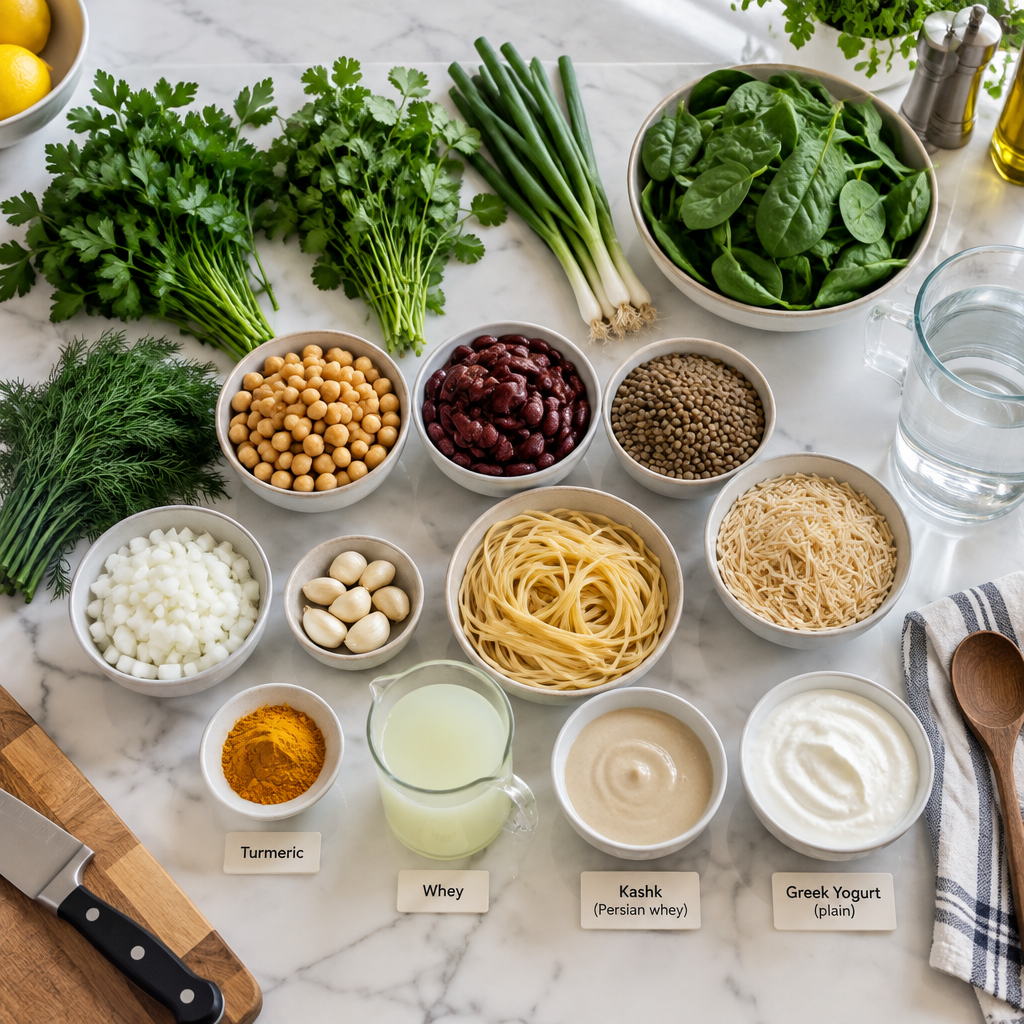
Key Ingredients for Ash-e-reshteh
Ash-e-reshteh is basically Persian comfort food in a bowl. It is loaded with herbs, beans, and noodles, and it gets finished with a few toppings that make it feel extra special. I have made it with different levels of “authentic” depending on what was in my pantry, and it still turns out delicious.
What you will need (and easy swaps)
- Fresh herbs: parsley, cilantro, and green onions are my usual base. Many people also use spinach and dill. If you only have some of these, still go for it.
- Beans and lentils: chickpeas, kidney beans, and lentils are common. Canned beans are totally fine if you want to keep it easy.
- Noodles (reshteh): traditional reshteh noodles are best, but linguine broken into thirds works in a pinch.
- Onions and garlic: do not skimp. The slow cooked onions bring so much flavor.
- Turmeric: gives that warm color and background flavor.
- Whey or tangy topping: kashk is traditional, but plain Greek yogurt thinned with a little water and salt works when you cannot find it.
- Dried mint: this is the signature vibe. If you love mint, keep a little extra for topping.
If you are into soups from different cuisines, you might also like this cozy option on my site: Quick and Easy Miso Soup with Tofu and Scallions Delight. Totally different flavor, but same soothing energy.
One quick note on herbs: the fresher they are, the brighter your Persian Herb and Bean Soup with Noodles will taste. Slightly wilted herbs are still fine, but skip anything slimy or bitter.
Step-by-Step Preparation Guide
This is not hard, but it does have a few steps. Think of it like building layers of flavor. I like doing the prep first so I am not scrambling while something is sizzling on the stove.
My simple game plan
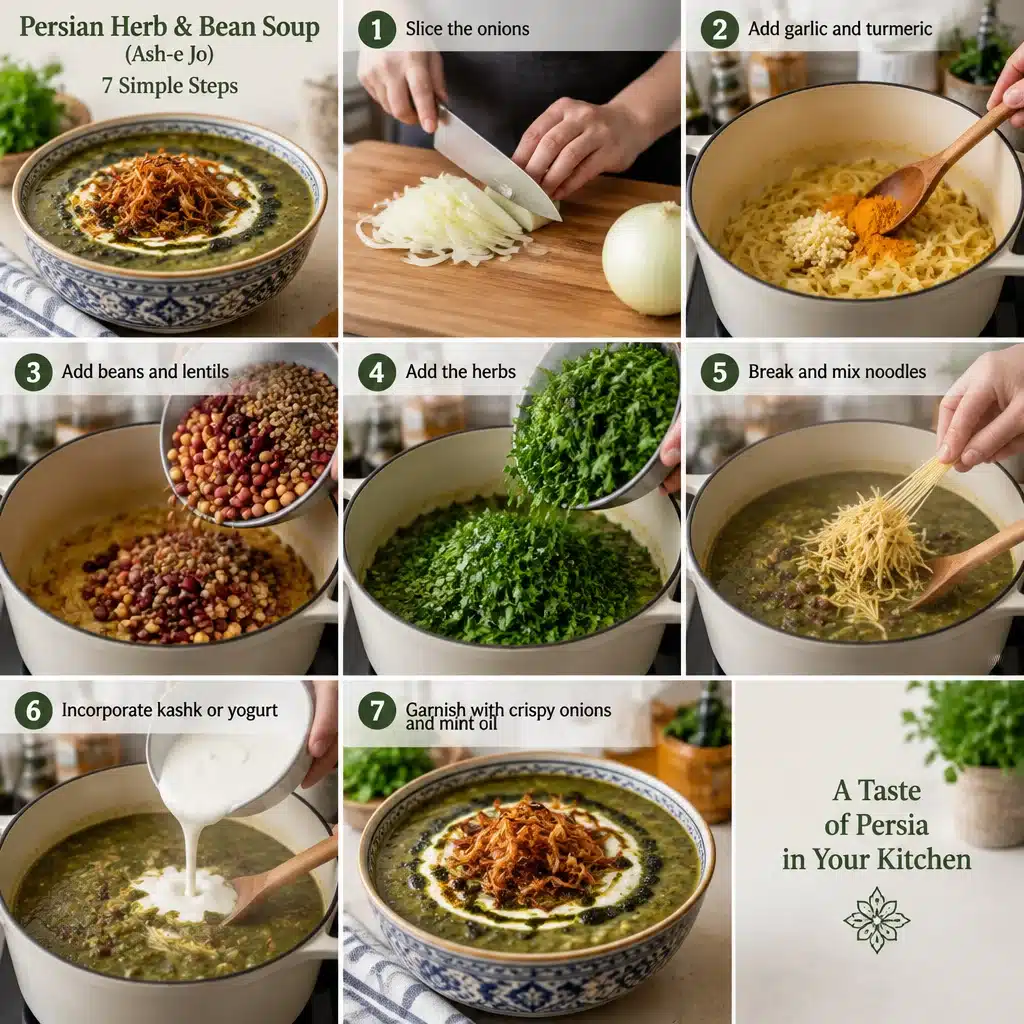
Step 1: Start with the onions. Slice onions thin and cook them in oil over medium heat until they turn deep golden. This takes a bit, but it is worth it. Scoop some out and save them for topping later.
Step 2: Add garlic and turmeric. Stir in minced garlic and turmeric for about 30 seconds to 1 minute, just until it smells amazing.
Step 3: Add beans and lentils. If you are using canned beans, rinse and drain them first. Add them plus lentils to the pot. Pour in water or broth and bring it to a gentle boil, then lower to a steady simmer.
Step 4: Herbs go in. Chop your herbs (not too fine, not too chunky) and add them to the pot. The soup will look like a green jungle at first. That is normal. Let it simmer so the herbs soften and the flavors mingle.
Step 5: Add noodles. Break your noodles into shorter pieces so they are easier to eat. Add them near the end so they do not turn mushy. Stir gently so nothing clumps at the bottom.
Step 6: Finish with tang. Stir in kashk if you have it, or a yogurt mixture if you are improvising. I like adding a bit, tasting, then adding more. You can always add, but you cannot unadd.
Step 7: Toppings. Top with those reserved onions, a drizzle of mint oil (dried mint warmed in oil), and another little spoon of kashk or yogurt if you like it creamy.
When I am in the mood to snack while the pot is simmering, I make something quick like Black Bean Dip with Lime and Cilantro. Not Persian, but the bright lime and herbs are a surprisingly good match with a cozy soup night.
Tips for Perfecting Your Soup
This is where I learned things the messy way, like overcooking noodles or under seasoning. Here is what actually helps.
Do not rush the onions. That deep golden color is flavor. If you stop too early, your soup will taste flatter.
Control the thickness. Persian Herb and Bean Soup with Noodles naturally thickens as it sits, especially because of the noodles and beans. If it gets too thick, just add a splash of water and warm it slowly, stirring often.
Salt in stages. Beans, herbs, and noodles all need salt, but if you dump it in early and then reduce the soup, it can get too salty. I salt lightly early, then adjust at the end.
Watch the noodles. Noodles can go from perfect to too soft fast. I add them when the beans and lentils are already tender and the soup tastes good, then I simmer just until the noodles are cooked.
“I made this for my family on a rainy Sunday and everyone went back for seconds. The herbs and noodles made it feel like a full meal, and the toppings were the fun part.”
Common Variations and Adaptations
The truth is, a lot of people make this soup their own. If you are cooking for allergies, picky eaters, or whatever you have in the pantry, you have options.
More or less herbs: If you love that fresh green flavor, add extra herbs and a handful of spinach. If you are new to herb heavy soups, start with a smaller amount and build up next time.
Bean swaps: No kidney beans? Use pinto. No chickpeas? Use cannellini. The vibe stays the same: hearty, soft beans that make the broth feel rich.
Make it vegan: Use water or veggie broth and skip dairy toppings, or use a plant based yogurt. For a kashk style tang, a little lemon juice and salt can help.
Gluten free: Use gluten free pasta in short shapes. Just keep an eye on cook time because some gluten free noodles get fragile if stirred too much.
Spice level: This soup is not meant to be spicy, but I have added a tiny pinch of red pepper flakes before and I did not regret it.
If you are the type who loves smooth soups too, this one is completely different but so cozy: Silky Butternut Squash Soup with Ginger and Apple. I rotate between both depending on my mood.
Serving Suggestions and Pairing Ideas
This is one of those meals where the bowl is the main event, but a few extras make it feel like a full spread.
- Serve it hot with toppings on the side so everyone can customize their bowl.
- Add a squeeze of lemon if you want the flavor to pop.
- Eat it with flatbread or even toasted bread if that is what you have.
- Pair with crunchy veggies like radishes, cucumbers, or a simple salad.
- Make a topping board: caramelized onions, mint oil, yogurt or kashk, and extra herbs.
If you are serving guests, I think Persian Herb and Bean Soup with Noodles is a great option because it feels special but it is still relaxed. I usually set the pot on the stove, keep it on low, and let people come back for refills. It is the kind of meal that makes everyone hang out in the kitchen a little longer.
Common Questions
Can I make Ash-e-reshteh ahead of time?
Yes, and it tastes even better the next day. Just know the noodles will soak up broth, so plan to add a little water when reheating.
Can I freeze it?
You can, but I recommend freezing it before adding the noodles if possible. Noodles can get too soft after thawing. If it is already finished, it is still fine, just a bit thicker.
What if I cannot find reshteh noodles?
Use linguine or spaghetti broken into shorter pieces. Cook time may vary, so taste as you go.
How do I keep the herbs from tasting dull?
Use fresh herbs when you can, and do not overcook the soup after the herbs go in. Also make sure you salt properly, since salt brings out herb flavor.
Is Persian Herb and Bean Soup with Noodles supposed to be thick?
Usually yes, it is hearty and spoonable, not a thin broth. But you can always thin it with more water or broth to match what you like.
A Cozy Bowl Worth Repeating
This soup is filling, flexible, and honestly just nice to have in your regular rotation, especially when you want something comforting but not boring. Once you get the hang of the herbs, beans, and noodles, you can adjust it a dozen ways and it still works. If you want a more formal reference point, you can also check out Ash-eh Reshteh (Persian Bean & Pasta Soup) – EatingWell and compare notes with how you like yours. Make a pot, set out the toppings, and let it be a slow dinner where everyone goes back for “just one more scoop.” 


